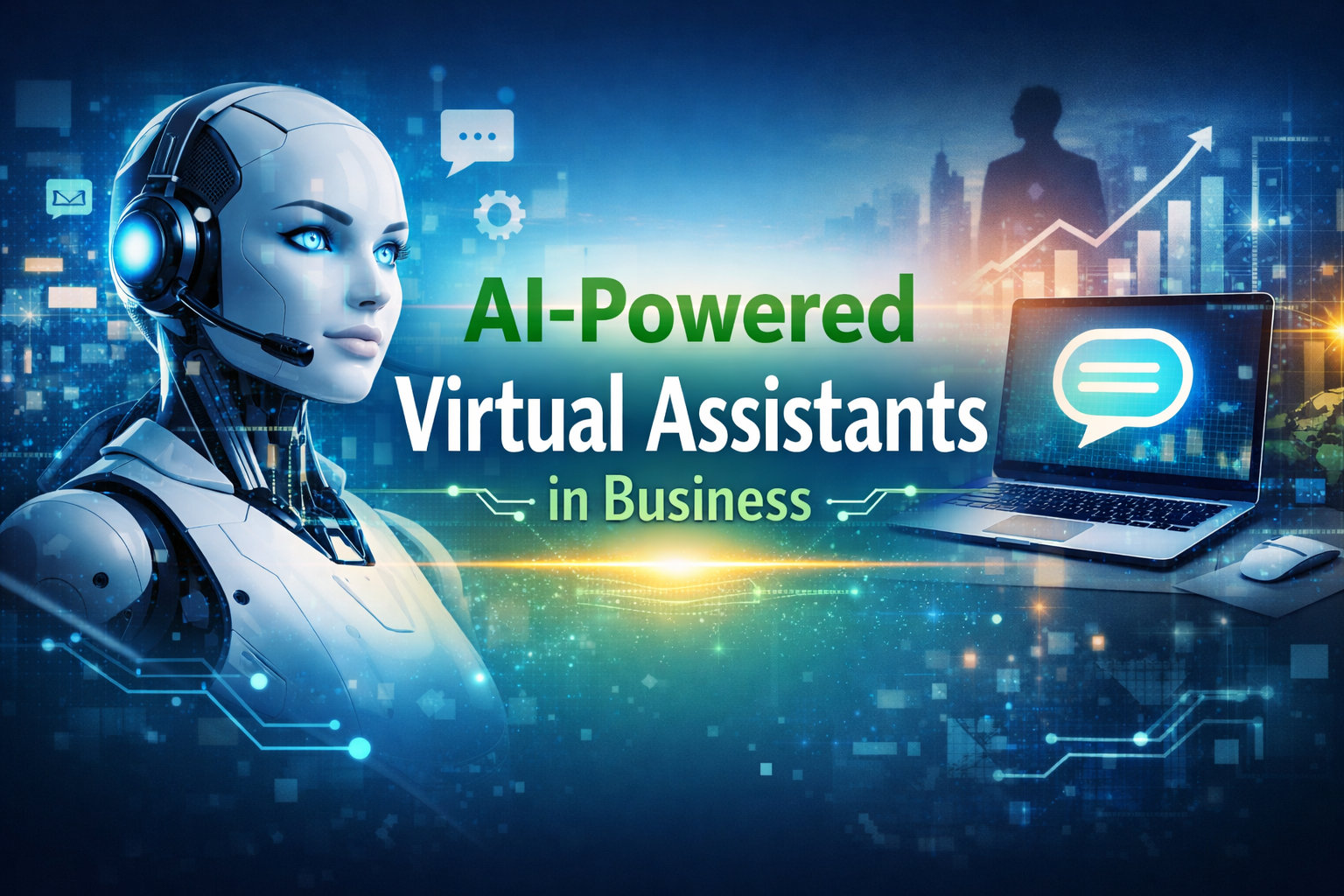
AI-Powered Virtual Assistants in Business
In today’s digital-first economy, businesses are rapidly adopting intelligent technologies to streamline operations and enhance customer experiences. One of the most transformative innovations is AI-powered virtual assistants in business. These intelligent systems use machine learning, natural language processing, and automation to perform tasks, answer queries, and support decision-making processes in real time.
Companies across industries are leveraging AI virtual assistants to reduce operational costs, improve efficiency, and deliver personalized services. From startups to enterprises, the integration of AI assistants is redefining how organizations interact with customers and manage internal workflows.
What Are AI-Powered Virtual Assistants?
AI-powered virtual assistants are software applications designed to simulate human interaction and automate business tasks. Unlike traditional chatbots, modern AI assistants understand context, learn from interactions, and continuously improve performance. Popular examples like Amazon Alexa, Google Assistant, and Microsoft Cortana demonstrate how intelligent systems can process voice commands and deliver accurate responses.
In business environments, these assistants handle customer support, appointment scheduling, email management, data entry, and even sales support. Their ability to operate 24/7 ensures uninterrupted service and faster response times.
Key Benefits of AI-Powered Virtual Assistants in Business
1. Enhanced Customer Support
AI assistants provide instant responses to customer inquiries, reducing wait times and improving satisfaction. They can manage high volumes of queries simultaneously, ensuring consistent service quality.
2. Improved Operational Efficiency
Routine administrative tasks consume valuable employee time. AI-powered virtual assistants automate repetitive processes, allowing teams to focus on strategic activities that drive growth.
3. Cost Reduction
By automating customer service and internal workflows, businesses reduce labor costs and minimize errors. This leads to higher productivity without increasing overhead expenses.
4. Data-Driven Insights
AI systems analyze large datasets to generate actionable insights. Businesses can use these insights to refine marketing strategies, predict customer behavior, and optimize performance.
Use Cases Across Industries
AI-powered virtual assistants in business are widely adopted across sectors:
E-commerce: Virtual assistants guide customers through product selection, track orders, and handle returns.
Healthcare: AI systems manage appointment bookings and provide preliminary patient support.
Finance: Assistants help customers check account balances, process transactions, and receive financial guidance.
Human Resources: AI tools screen resumes, schedule interviews, and answer employee queries efficiently.
These applications demonstrate how AI assistants enhance both customer-facing and internal operations.
AI Virtual Assistants and Business Growth
The adoption of AI-powered virtual assistants in business directly contributes to scalability. As customer demands increase, AI systems handle higher workloads without compromising service quality. This flexibility allows businesses to expand operations without proportionally increasing staffing costs.
Moreover, personalization plays a crucial role in customer retention. AI assistants analyze user behavior and preferences to deliver tailored recommendations and targeted communication. This improves engagement, boosts conversions, and strengthens brand loyalty.
Security is another critical factor. Advanced AI systems incorporate encryption and compliance measures to protect sensitive data, ensuring trust and reliability in digital interactions.
The Future of AI-Powered Virtual Assistants in Business
The future of AI-powered virtual assistants in business looks promising. With advancements in machine learning and conversational AI, these systems will become more human-like, intuitive, and proactive. Integration with cloud computing and IoT devices will further expand their capabilities.
Businesses that adopt AI-driven automation early gain a competitive advantage by improving efficiency, reducing costs, and enhancing customer experiences. As technology evolves, AI assistants will move beyond basic support roles to strategic partners in business growth.
Conclusion
AI-powered virtual assistants in business are no longer optional—they are essential for modern enterprises aiming to stay competitive. By automating routine tasks, improving customer service, and providing data-driven insights, these intelligent systems transform operations and unlock new growth opportunities. Organizations that embrace AI virtual assistant technology today will lead the innovation-driven marketplace of tomorrow.