Smart Reporting for Management
In today’s competitive business environment, Smart Reporting for Management has become essential for organizations that want to stay ahead. Traditional reporting methods often rely on static spreadsheets and delayed updates, making it difficult for leaders to make timely decisions. Smart reporting transforms raw data into meaningful insights, enabling management teams to respond quickly, improve performance, and drive sustainable growth.
Modern businesses generate large volumes of data every day. Without an efficient reporting system, this data becomes overwhelming instead of helpful. Smart reporting solutions collect, organize, and visualize business data in real time, helping management focus on strategy rather than manual analysis.
What is Smart Reporting for Management?
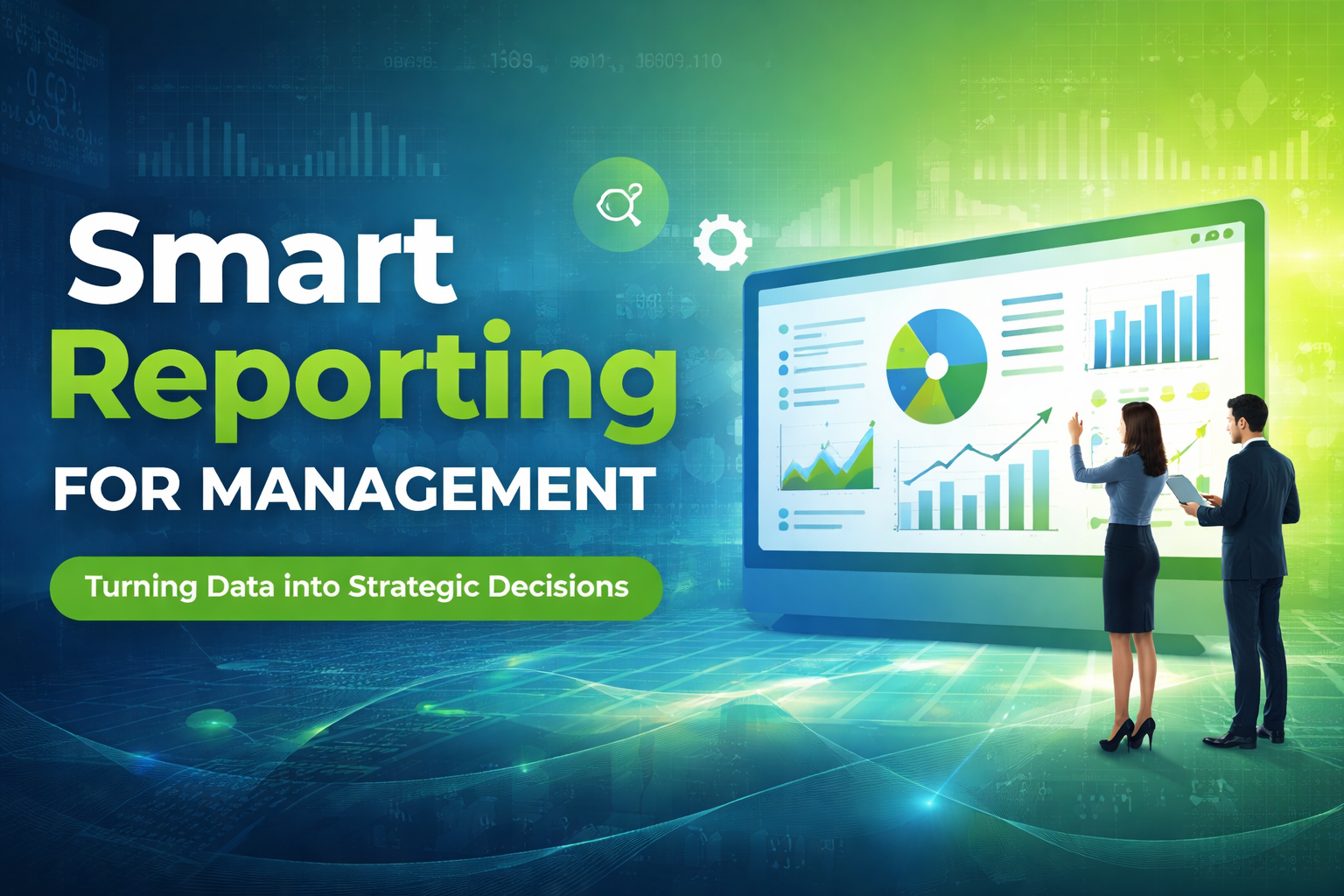
Smart reporting for management refers to the use of advanced tools and technologies to generate automated, real-time, and visually engaging business reports. Unlike traditional reports, smart reports are interactive and customizable. They allow managers to track KPIs, analyze trends, and monitor business performance from a single dashboard.
Platforms like Microsoft Power BI, Tableau, and Google Looker Studio are widely used to create intelligent dashboards that simplify complex data. These tools help management teams make data-driven decisions faster and more accurately.
Why Smart Reporting is Important for Management
1. Real-Time Decision Making
Smart reporting provides real-time insights, allowing management to react instantly to changes in sales, operations, or customer behavior. Instead of waiting for monthly reports, leaders can monitor performance daily or even hourly.
2. Improved Transparency
With centralized dashboards, every department works with the same data. This improves transparency and reduces miscommunication across teams.
3. Better Performance Tracking
Smart reporting systems automatically track KPIs such as revenue growth, profit margins, customer acquisition cost, and operational efficiency. Managers can quickly identify gaps and take corrective actions.
4. Data-Driven Strategy
When management relies on data instead of assumptions, strategic planning becomes more accurate and measurable. Smart reporting supports forecasting and long-term planning.
Key Features of Smart Reporting Systems
To implement smart reporting for management successfully, businesses should look for the following features:
• Automated data collection
• Interactive dashboards
• Customizable KPI tracking
• Cloud-based accessibility
• Advanced data visualization
• Predictive analytics
These features ensure that reports are not only accurate but also actionable.
Benefits of Smart Reporting for Business Growth
Smart reporting for management directly impacts business growth. It reduces manual workload, increases efficiency, and enhances accountability. When management teams have instant access to performance metrics, they can optimize budgets, allocate resources effectively, and improve profitability.
For small and medium enterprises (SMEs), smart reporting levels the playing field. Even smaller organizations can leverage business intelligence tools to compete with larger enterprises. Cloud-based reporting solutions make advanced analytics affordable and scalable.
Additionally, smart reporting enhances collaboration between departments. Sales, marketing, finance, and operations teams can align their goals based on shared data insights.
How to Implement Smart Reporting Successfully
Implementing smart reporting requires a structured approach:
First, identify key performance indicators relevant to your business goals.
Second, choose the right reporting tool based on your budget and scalability needs.
Third, integrate all business data sources into a centralized system.
Fourth, train your management team to interpret dashboards effectively.
Regular review and optimization of reporting metrics ensure long-term success.
The Future of Smart Reporting for Management
The future of smart reporting lies in artificial intelligence and predictive analytics. Businesses are increasingly using AI-powered dashboards that not only show past performance but also predict future outcomes. This shift enables proactive decision-making rather than reactive management.
As technology continues to evolve, smart reporting will become more personalized, automated, and accessible. Companies that adopt smart reporting early gain a competitive advantage in efficiency and strategic planning.
Conclusion
Smart Reporting for Management is no longer optional—it is a necessity in today’s data-driven world. By adopting intelligent reporting tools, businesses can transform raw data into clear insights, improve operational efficiency, and make faster strategic decisions. Organizations that prioritize smart reporting empower their management teams with clarity, accuracy, and confidence.
If your goal is sustainable growth and better decision-making, implementing smart reporting is the first step toward building a future-ready organization.