Building an Employee Self-Service Portal
Building an employee self-service portal has become a strategic necessity for modern organizations. As workplaces become more digital and remote-friendly, employees expect quick access to information, tools, and services without relying on HR for every small request. An employee self-service portal (ESS portal) is a centralized digital platform that allows employees to manage their personal and professional data independently.
From applying for leave to downloading salary slips and updating personal details, self-service portals reduce administrative burden and create a smoother employee experience. Companies that invest in such portals not only improve operational efficiency but also build a culture of transparency and empowerment.
What Is an Employee Self-Service Portal?
An employee self-service portal is a secure web-based or mobile platform that gives employees direct access to HR-related services. Instead of filling forms manually or emailing HR teams, employees can perform actions in real time. These portals are typically integrated with HRMS or ERP systems to ensure data accuracy and automation.
The goal of building an employee self-service portal is to shift routine HR processes from manual workflows to automated digital systems. This allows HR teams to focus on strategic tasks like talent development and workforce planning instead of repetitive administrative work.
Key Features of a High-Performing ESS Portal
When building an employee self-service portal, it is essential to include features that are both functional and user-friendly. Some core features include:
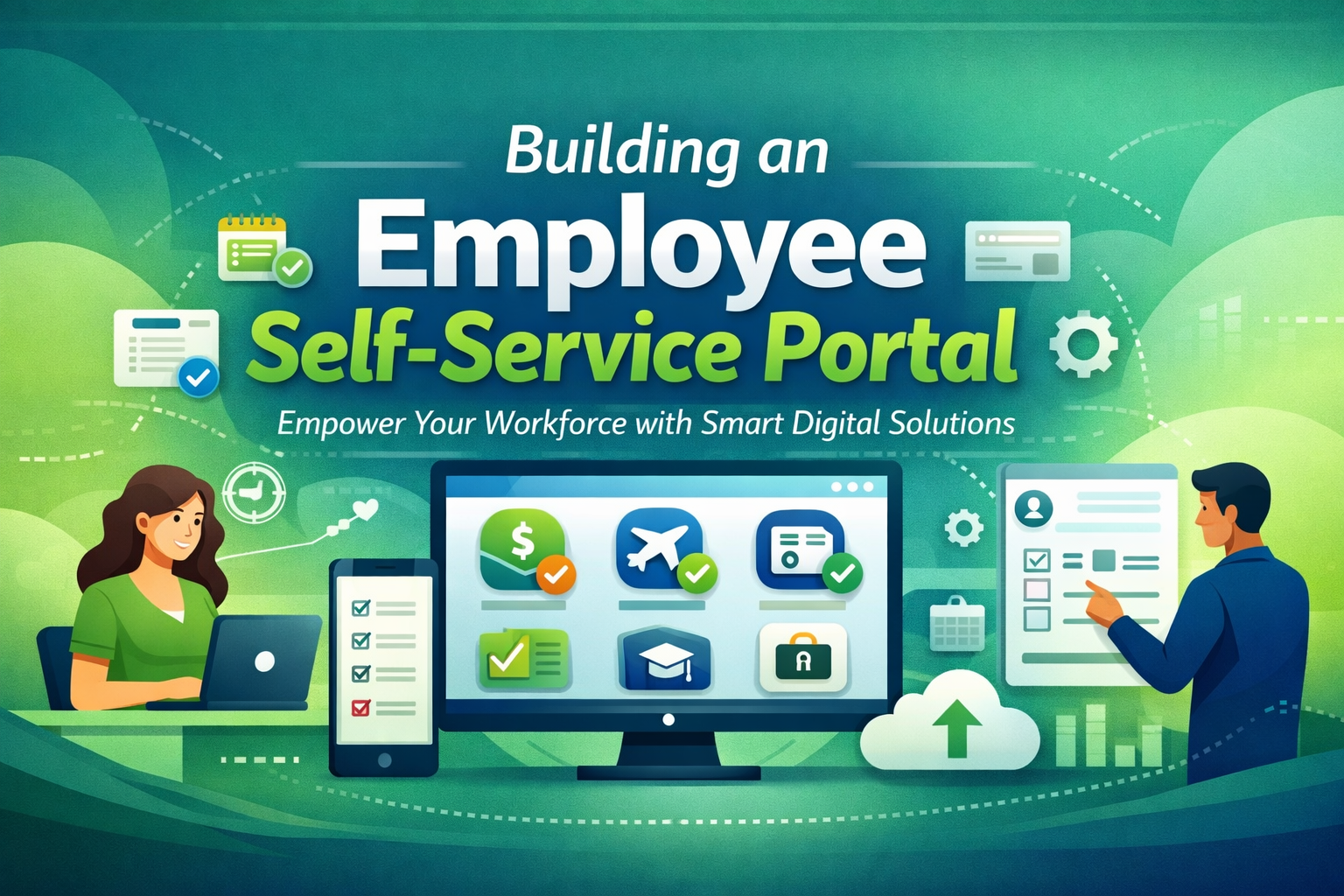
Personal profile management for updating contact details, documents, and bank information.
Leave and attendance tracking with real-time balance visibility.
Payroll access including payslips, tax forms, and salary history.
Internal communication tools such as announcements and policy updates.
Learning and development modules for training and skill tracking.
IT support tickets and asset requests.
These features create a one-stop platform that supports employees throughout their lifecycle in the organization.
Benefits of Building an Employee Self-Service Portal
One of the biggest advantages of building an employee self-service portal is improved efficiency. HR teams save time by reducing paperwork and manual data entry. Employees get instant access to services without waiting for approvals or email responses.
Another major benefit is improved employee satisfaction. When employees feel in control of their information and processes, it builds trust and engagement. A good self-service portal also reduces errors, as employees directly update their own data instead of relying on intermediaries.
From a business perspective, such portals help reduce operational costs, improve data accuracy, and strengthen compliance with internal policies and legal requirements.
Steps to Build an Effective ESS Portal
The first step in building an employee self-service portal is identifying business requirements. Understand what processes you want to automate and which features employees need most.
Next, focus on user experience. The portal should be intuitive, mobile-friendly, and easy to navigate. A complex interface can reduce adoption rates and defeat the purpose of automation.
Security is another critical factor. Since the portal handles sensitive employee data, it must include role-based access, encryption, and secure authentication methods.
Finally, integrate the portal with existing HR and payroll systems to ensure real-time data flow and avoid duplication. Regular updates and feedback loops will help improve the portal continuously.
Challenges and How to Overcome Them
While building an employee self-service portal offers many benefits, organizations may face challenges such as low adoption, technical issues, or resistance to change.
To overcome these challenges, provide proper training and onboarding for employees. Clearly communicate the benefits and offer support during the transition phase. Choosing scalable and reliable technology platforms also ensures long-term success.
Another challenge is maintaining data accuracy. This can be solved through automated validation, regular audits, and strong system integrations.
The Future of Employee Self-Service Portals
The future of building an employee self-service portal lies in AI and automation. Modern portals are evolving into intelligent systems that provide chatbots for HR queries, predictive analytics for employee behavior, and personalized dashboards.
With remote and hybrid work models becoming the norm, ESS portals will play an even bigger role in connecting employees with organizational systems. Companies that invest early in smart self-service solutions will gain a competitive edge in workforce management.
Conclusion
Building an employee self-service portal is no longer optional for organizations that aim to stay competitive and employee-centric. It simplifies HR operations, empowers employees, and supports digital transformation. By focusing on usability, security, and integration, businesses can create a powerful platform that drives efficiency and engagement.
In a world where speed, transparency, and automation define success, an employee self-service portal is one of the most impactful investments a company can make for long-term growth and sustainability.