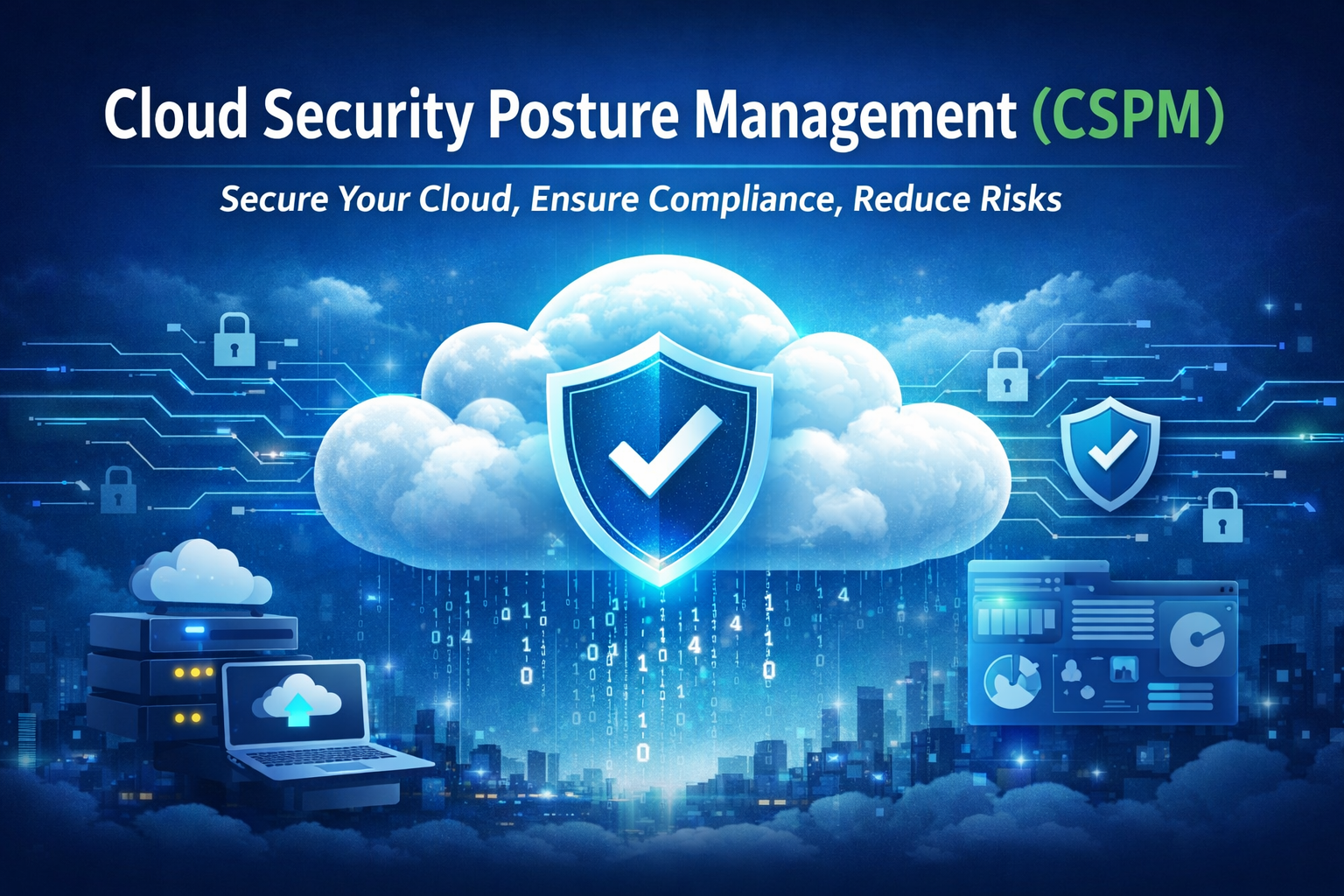
Cloud Security Posture Management (CSPM)
Cloud adoption has transformed the way businesses operate. From startups to enterprises, organizations rely heavily on cloud platforms to store data, run applications, and scale operations. However, with this flexibility comes a new set of security challenges. Misconfigurations, compliance gaps, and lack of visibility often expose cloud environments to cyber threats. This is where Cloud Security Posture Management (CSPM) becomes critical.
What Is Cloud Security Posture Management (CSPM)?
Cloud Security Posture Management refers to a category of security tools and practices designed to continuously monitor, assess, and improve the security posture of cloud infrastructure. CSPM solutions automatically identify risks such as misconfigured storage, excessive permissions, unencrypted data, and policy violations across cloud platforms.
In simple terms, CSPM acts as a security guardian for your cloud environment, ensuring that configurations follow best practices and regulatory standards.
Why CSPM Is Important for Businesses
One of the biggest risks in cloud computing is human error. Even experienced teams can accidentally leave a storage bucket public or assign unnecessary access rights. These small mistakes often lead to data breaches and compliance failures.
CSPM is important because it:
-
Provides real-time visibility into cloud assets.
-
Detects misconfigurations before attackers exploit them.
-
Helps maintain compliance with standards like ISO, GDPR, HIPAA, and PCI-DSS.
-
Reduces the overall attack surface.
Without CSPM, organizations operate blindly, relying on manual audits that are slow and prone to oversight.
Key Features of CSPM Solutions
A robust CSPM platform offers several core capabilities. Continuous monitoring ensures that security checks are performed automatically, not just during scheduled audits. Risk assessment engines analyze configurations against security benchmarks and compliance frameworks.
Another major feature is automated remediation. Instead of only flagging issues, CSPM tools can fix certain misconfigurations instantly or guide teams through the resolution process. Reporting and dashboards provide actionable insights, helping security teams prioritize critical risks.
How CSPM Improves Cloud Compliance
Regulatory compliance is a major concern for organizations handling sensitive data. CSPM simplifies compliance by mapping cloud configurations to regulatory requirements. This allows businesses to generate audit-ready reports without spending weeks on manual documentation.
By continuously enforcing policies, CSPM ensures that compliance is not a one-time activity but an ongoing process. This reduces the chances of penalties, reputational damage, and legal issues.
CSPM vs Traditional Security Tools
Traditional security tools were designed for on-premise infrastructure. They often struggle to keep up with the dynamic nature of cloud environments. CSPM, on the other hand, is cloud-native. It adapts to changes in real time and scales with the organization’s cloud usage.
Unlike traditional tools that focus mainly on threat detection, CSPM focuses on prevention. It addresses vulnerabilities before they turn into actual attacks.
Business Benefits of Implementing CSPM
Implementing Cloud Security Posture Management brings measurable business value. It enhances trust among customers by ensuring data protection. It also improves operational efficiency by automating security checks and reducing manual workloads.
From a financial perspective, CSPM lowers the cost of security incidents and compliance management. Instead of reacting to breaches, organizations can proactively manage risks.
Best Practices for Using CSPM Effectively
To get the most out of CSPM, organizations should integrate it with their overall security strategy. Security policies must be clearly defined and aligned with business goals. Regular reviews of alerts and reports are essential to maintain visibility.
Training teams on cloud security fundamentals further strengthens CSPM effectiveness. When combined with skilled professionals, CSPM becomes a powerful defense layer.
Conclusion
Cloud Security Posture Management is no longer optional for modern businesses. As cloud environments grow more complex, the risk of misconfigurations and compliance gaps increases. CSPM provides the visibility, automation, and control needed to secure cloud infrastructure effectively.
By adopting CSPM, organizations can protect sensitive data, meet regulatory requirements, and build a resilient security framework for the future. In a world where cloud is the backbone of digital transformation, CSPM stands as a key pillar of sustainable and secure growth.