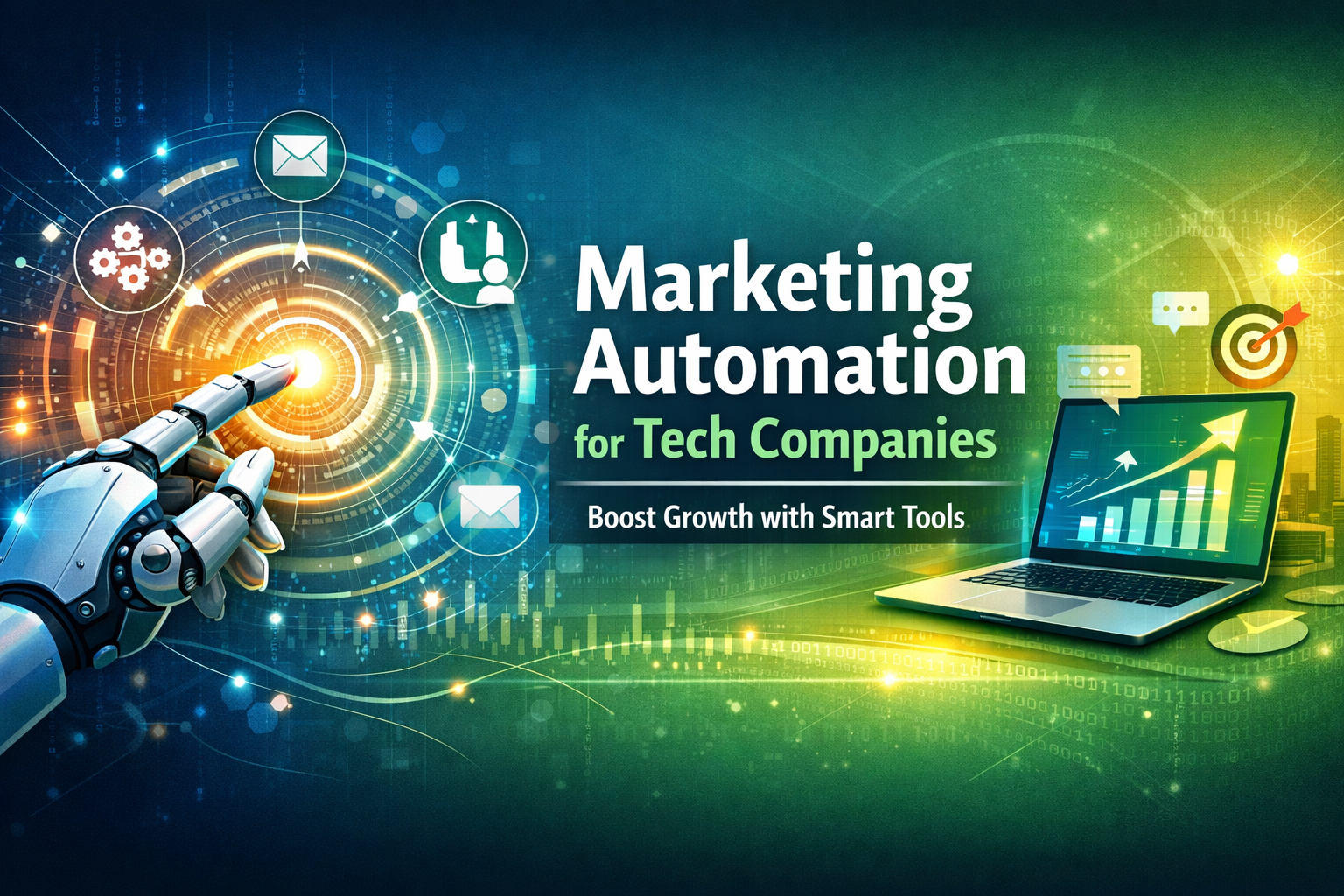
Marketing Automation for Tech Companies
Marketing automation for tech companies has become one of the most powerful strategies to scale faster, generate quality leads, and maintain consistent customer engagement. In today’s competitive digital environment, relying only on manual marketing processes is no longer enough. Automation allows technology-driven businesses to work smarter, not harder.
Whether you are a SaaS startup, IT service provider, or cloud-based platform, marketing automation helps you manage complex customer journeys with minimal human effort while maximizing performance.
What is Marketing Automation?
Marketing automation refers to the use of software tools and platforms to automate repetitive marketing tasks such as email campaigns, social media posting, lead scoring, customer segmentation, and performance tracking. These tools are designed to nurture prospects automatically through predefined workflows.
For tech companies, where sales cycles are often long and decision-making involves multiple stakeholders, automation ensures that no lead is ignored and every potential customer receives timely and relevant communication.
Why Tech Companies Need Marketing Automation
Tech companies deal with highly informed customers who expect personalized and value-driven communication. Automation helps bridge the gap between marketing and sales by delivering targeted messages at the right time.
It also improves operational efficiency. Instead of spending hours sending emails or tracking leads manually, teams can focus on strategy, creativity, and customer relationships. Automation tools handle the repetitive work in the background.
Key Benefits of Marketing Automation for Tech Companies
One major benefit is lead nurturing. Automation tools track user behavior such as website visits, content downloads, and email clicks. Based on these actions, prospects receive personalized messages that move them closer to conversion.
Another advantage is improved customer experience. Automated workflows ensure consistent communication across all touchpoints, including email, chatbots, landing pages, and CRM systems.
Marketing automation also boosts ROI. By analyzing campaign performance in real time, tech companies can optimize strategies quickly and invest only in channels that deliver results.
How Marketing Automation Improves Sales Alignment
Marketing and sales alignment is critical for tech businesses. Automation platforms integrate with CRM systems, allowing sales teams to access real-time data about lead activity and engagement levels.
This ensures that sales representatives contact prospects at the right stage of the buyer journey, increasing conversion rates and shortening sales cycles.
Popular Use Cases in Tech Marketing
Email marketing remains one of the most common use cases. Automated email sequences welcome new users, onboard customers, and re-engage inactive leads.
Content marketing also benefits from automation. Blog updates, webinars, whitepapers, and case studies can be distributed automatically based on user preferences.
Customer retention is another strong area. Automated feedback surveys, renewal reminders, and product updates help maintain long-term relationships.
Choosing the Right Marketing Automation Tools
When selecting a tool, tech companies should focus on scalability, integration capabilities, analytics, and ease of use. The best platforms support multi-channel campaigns and provide detailed reporting dashboards.
It is also important to choose tools that integrate with existing systems like CRM, helpdesk software, and analytics platforms to create a unified marketing ecosystem.
Best Practices for Successful Implementation
Start with clear goals such as increasing leads, improving engagement, or reducing churn. Design workflows based on customer behavior and regularly test performance.
Avoid over-automation. While automation saves time, human interaction is still essential for building trust and handling complex customer needs.
Regularly analyze data and optimize campaigns. Continuous improvement ensures that automation remains effective as market conditions change.
The Future of Marketing Automation in Tech
With the rise of AI and machine learning, marketing automation is becoming even smarter. Predictive analytics, intelligent chatbots, and real-time personalization are shaping the future of tech marketing.
Companies that adopt automation early gain a competitive advantage by responding faster to customer needs and delivering highly relevant experiences.
Conclusion
Marketing automation for tech companies is no longer optional; it is a necessity for sustainable growth. By automating workflows, improving lead nurturing, and enhancing customer experiences, tech businesses can scale efficiently while maintaining strong relationships.
When implemented strategically, marketing automation transforms digital marketing into a powerful growth engine that drives long-term success in the technology industry.