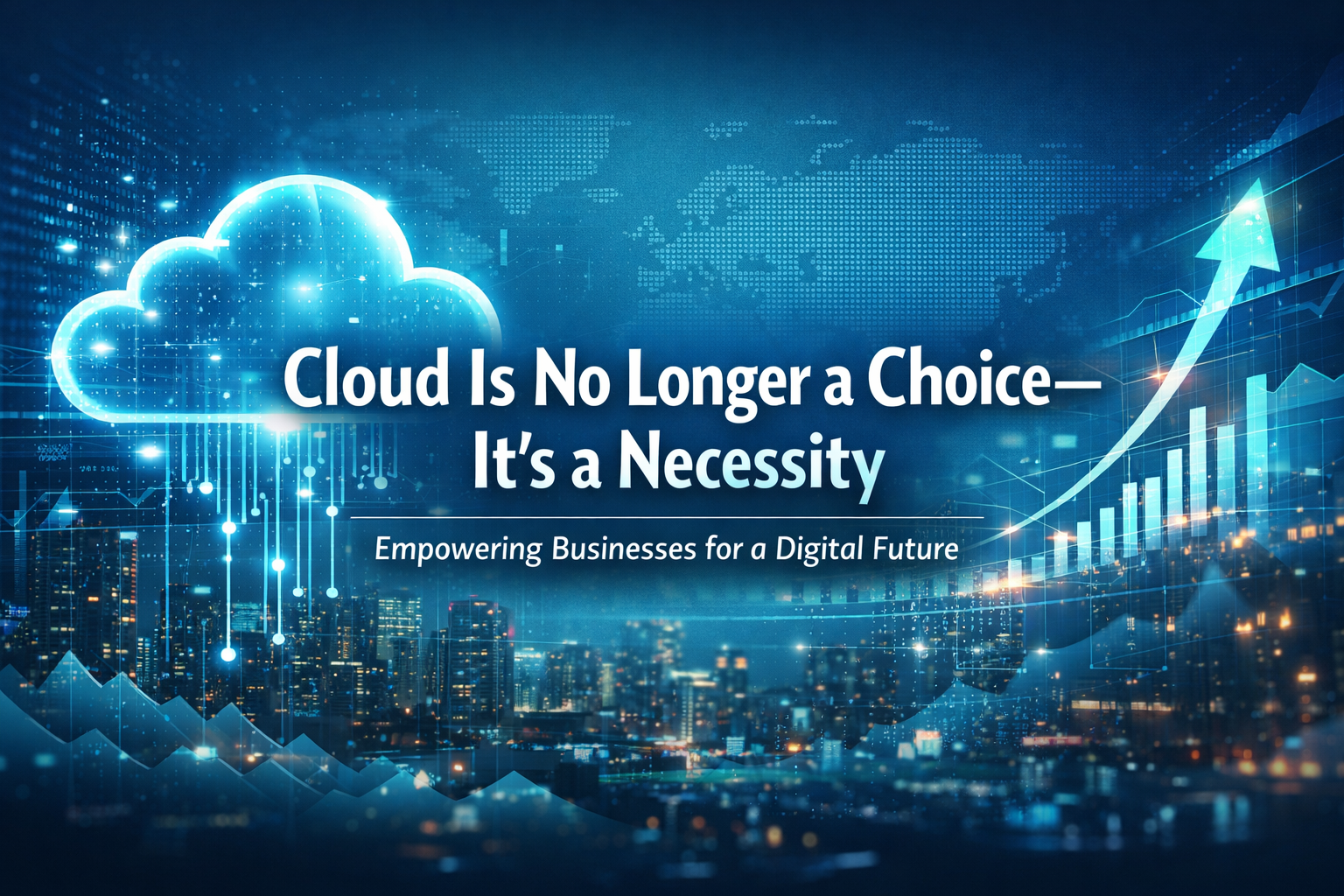
Cloud Is No Longer a Choice—It’s a Necessity
In today’s fast-moving digital world, cloud computing is no longer a luxury reserved for large enterprises. It has become a fundamental requirement for businesses of all sizes. From startups to global corporations, organizations now rely on cloud technology to stay competitive, secure, and scalable. Companies that delay cloud adoption risk falling behind in efficiency, innovation, and customer experience.
The shift toward cloud computing has accelerated due to changing work environments, rising data demands, and increasing cybersecurity threats. Businesses now need systems that are flexible, accessible, and resilient. Traditional on-premise infrastructure struggles to meet these expectations, making cloud solutions the smarter and more sustainable choice.
Scalability That Grows With Your Business
One of the biggest advantages of cloud computing is scalability. Businesses no longer need to predict future infrastructure requirements years in advance. Cloud platforms allow organizations to scale resources up or down based on demand. This flexibility ensures optimal performance during peak times while preventing unnecessary expenses during low usage periods.
For growing businesses, this means faster expansion without heavy upfront investments. New applications, storage, and computing power can be deployed in minutes, enabling rapid innovation and market responsiveness. Scalability is no longer a technical challenge but a strategic advantage.
Cost Efficiency and Smarter Resource Management
Cloud computing transforms capital expenses into operational expenses. Instead of investing heavily in hardware, maintenance, and upgrades, businesses pay only for what they use. This pay-as-you-go model reduces financial risk and improves budget control.
Additionally, cloud providers handle system updates, hardware failures, and performance optimization. This allows internal IT teams to focus on innovation rather than infrastructure management. Reduced downtime and predictable costs make cloud adoption financially practical for modern organizations.
Enhanced Security and Data Protection
Security concerns once slowed cloud adoption, but today the cloud is often more secure than traditional systems. Leading cloud providers invest heavily in advanced security measures, including encryption, intrusion detection, automated backups, and compliance certifications.
Data stored in the cloud benefits from redundancy and disaster recovery features that are difficult to replicate on-premise. In case of cyberattacks or hardware failures, businesses can recover data quickly and continue operations with minimal disruption. Strong security frameworks make the cloud a trusted environment for sensitive business information.
Supporting Remote Work and Collaboration
The modern workforce is no longer confined to office spaces. Cloud computing enables employees to access data, applications, and tools from anywhere, at any time. This accessibility supports remote work, hybrid models, and global collaboration.
Teams can collaborate in real time, share files securely, and maintain productivity regardless of location. Cloud-based tools ensure business continuity and employee flexibility, which are now essential for attracting and retaining talent.
Driving Innovation and Digital Transformation
Cloud platforms provide access to advanced technologies such as artificial intelligence, machine learning, big data analytics, and automation. These tools empower businesses to analyze customer behavior, optimize operations, and deliver personalized experiences.
Innovation becomes faster and more cost-effective when powered by the cloud. Businesses can experiment, test, and deploy new ideas without long development cycles or infrastructure limitations.
Conclusion
Cloud computing is no longer a strategic option—it is a business necessity. Scalability, cost efficiency, security, collaboration, and innovation all depend on cloud adoption. Organizations that embrace the cloud position themselves for long-term growth, resilience, and success. In a digital-first economy, the cloud is not the future—it is the present.