How AI Chatbots Reduce Support Costs for SMEs
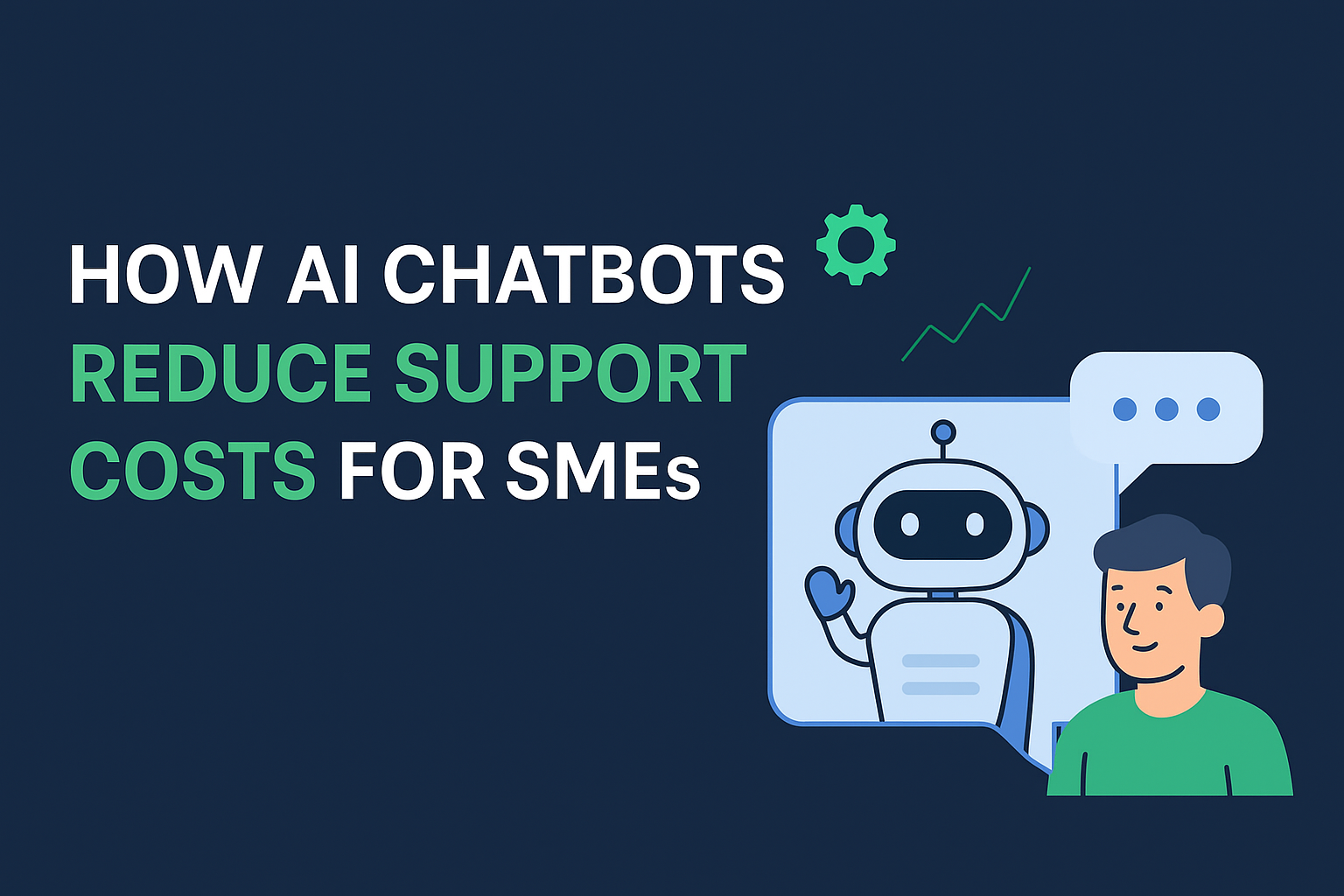
Small and medium-sized enterprises (SMEs) often struggle with rising customer support expenses. Hiring large teams, managing high ticket volumes, and maintaining 24/7 availability can become financially challenging. This is where AI chatbots have emerged as a game-changing solution. They automate responses, streamline customer interactions, and deliver instant support at a fraction of the cost. In this blog, we explore exactly how AI chatbots reduce support costs for SMEs and why they are becoming a must-have tool for modern businesses.
1. Automating Repetitive Customer Queries
One of the biggest cost burdens for SMEs is handling repetitive questions such as shipping details, pricing, product availability, and troubleshooting. AI chatbots can automate up to 70–80% of these common queries, reducing the need for large support teams.
By offering instant replies, chatbots minimize ticket volumes and allow human agents to focus only on complex cases, directly lowering operational costs.
2. Reducing the Need for Large Support Teams
Hiring, training, and managing customer service staff is expensive. SMEs often struggle to scale their teams during peak periods.
AI chatbots help by acting as virtual agents that work continuously without needing salaries, breaks, or training time.
This reduces overall staffing expenses and allows SMEs to operate leaner support teams, significantly cutting monthly costs.
3. Providing 24/7 Support at Zero Extra Cost
Customers expect fast responses, even outside business hours. Offering 24/7 human support is costly and unrealistic for many SMEs.
AI chatbots solve this by delivering round-the-clock assistance without any additional labor cost.
When customers receive instant responses, it prevents lost sales and reduces churn — indirectly contributing to cost savings.
4. Lowering Ticket Resolution Time
Slow response times increase support costs because they lead to more follow-ups and customer dissatisfaction.
AI chatbots analyze queries, provide quick answers, categorize tickets, and route them efficiently. This reduces average resolution time and avoids unnecessary workload on human agents.
Faster solutions also improve customer satisfaction, reducing the chances of escalations and refunds.
5. Reducing Human Error and Associated Costs
Mistakes in customer service can lead to financial losses. AI chatbots minimize errors by delivering consistent, accurate, and data-driven responses.
This reduces the risk of miscommunication, incorrect information, and expensive service reversals — helping SMEs save money in the long run.
6. Improving First-Contact Resolution (FCR) Rates
AI chatbots are trained to understand customer intent and provide accurate solutions instantly.
When more issues are resolved in the first interaction, SMEs save time, reduce human involvement, and streamline operations.
Higher FCR also means lower cost per ticket.
7. Boosting Agent Productivity and Efficiency
Instead of replacing humans, AI chatbots support them by handling basic tasks.
Human agents can then focus on complex issues, upselling opportunities, and relationship building.
This improves team productivity and reduces the need for extra hires.
Conclusion
AI chatbots are no longer optional — they are essential for SMEs looking to reduce support costs while improving service quality. By automating repetitive tasks, reducing team size requirements, offering 24/7 support, and boosting efficiency, AI chatbots help SMEs operate smarter, leaner, and more profitably.
In a competitive market, adopting chatbot automation is one of the simplest and most cost-effective ways to transform customer support.