Understanding S3-Compatible Object Storage and Its Benefits
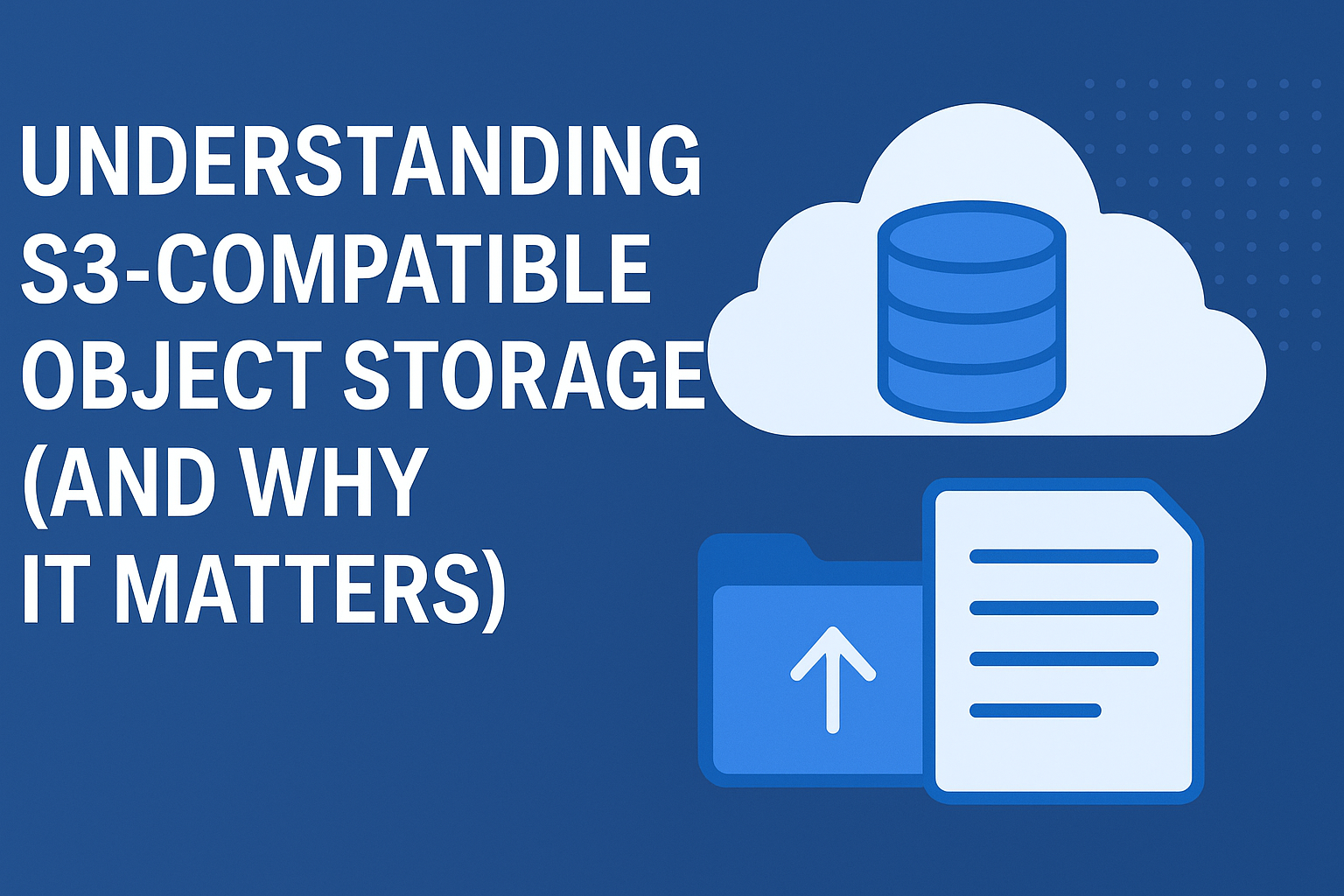
In today’s cloud-driven world, businesses need reliable, scalable, and cost-efficient ways to store and manage massive amounts of data. S3-compatible object storage has emerged as one of the most flexible and powerful solutions to meet these needs.
But what exactly does S3-compatible mean, and why should your organization care about it? Let’s break it down simply.
What Is S3-Compatible Object Storage?
To understand S3-compatible storage, we first need to know what object storage is.
In object storage, data is stored as discrete units called objects instead of files or blocks. Each object includes the data itself, metadata, and a unique identifier (ID). This allows for easier retrieval, organization, and management—perfect for large amounts of unstructured data like images, videos, backups, and logs.
Now, S3 (Simple Storage Service) is a storage protocol originally developed by Amazon Web Services (AWS). Over time, S3 became the de facto standard for object storage APIs.
So, when a storage system is described as S3-compatible, it means it supports the same API and commands as AWS S3—allowing users to integrate and migrate data seamlessly between AWS and other cloud or on-premises environments.
How S3-Compatible Object Storage Works
S3-compatible systems operate using REST APIs for data transfer. Users interact with data by sending HTTP-based requests such as:
-
PUT (to upload an object)
-
GET (to download an object)
-
DELETE (to remove an object)
This standardized approach enables developers to use existing S3 tools, SDKs, and workflows—without changing their applications.
Whether deployed in a public cloud, private cloud, or hybrid infrastructure, S3-compatible storage delivers a consistent experience for managing and scaling data.
Key Benefits of S3-Compatible Object Storage
1️⃣ Scalability Without Limits
Unlike traditional file systems, S3-compatible storage can grow almost infinitely. You can store terabytes or even petabytes of data effortlessly—making it ideal for analytics, AI, and big data workloads.
2️⃣ Cost-Efficiency
By using commodity hardware or hybrid setups, organizations can significantly cut storage costs compared to proprietary cloud storage models.
3️⃣ Data Durability and Security
S3-compatible systems typically use replication and erasure coding to ensure data durability and availability. Many solutions also integrate encryption, access control lists (ACLs), and versioning for better protection.
4️⃣ Vendor Flexibility
Since it follows an open standard, businesses aren’t locked into one provider. You can switch between AWS, Wasabi, MinIO, Backblaze, or on-premises options without reworking your entire system.
5️⃣ Easy Integration with Cloud Applications
From backup software to data lakes, S3-compatible APIs allow seamless integration with modern IT tools, ensuring smooth data management across different platforms.
Why S3 Compatibility Matters for Modern Businesses
In today’s multi-cloud era, flexibility is key. Companies often use multiple cloud vendors or maintain hybrid infrastructures. S3 compatibility ensures interoperability—allowing smooth data transfer, migration, and disaster recovery between environments.
It also future-proofs your architecture, as more storage vendors and applications adopt the S3 API standard. This means your investment remains relevant and adaptable to evolving technologies.
Final Thoughts
S3-compatible object storage bridges the gap between scalability, cost-efficiency, and vendor flexibility. It empowers organizations to store, protect, and manage data in a consistent, standardized way—without being tied to one cloud provider.
As data continues to grow exponentially, adopting an S3-compatible storage solution ensures your infrastructure is ready for tomorrow’s digital demands.